Showing posts with label Anabaptists. Show all posts

Monday, February 2, 2015

Foundations of the Church of England CVI


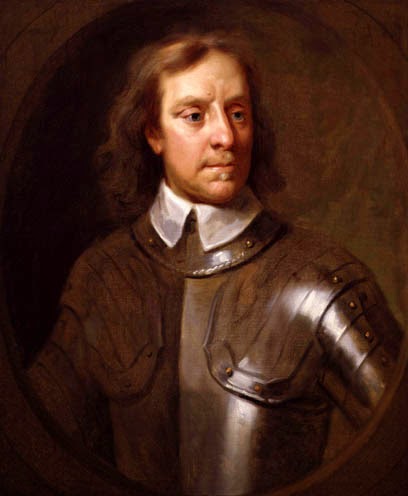
Oliver Cromwell, leader 
of the Puritan faction and 
Lord Protector of England
after the abolition of the 
monarchy

There is a lot that I want to get to.  I want to follow up on the French and Anti-Semitism theme with the connections between Anti-Semitism and Catholic “Traditionalist” movements as well as Political Monarchism and Catholic Traditionalism.  Then I have a lot of material on the dissatisfaction of the Traditional wing-nuts with Pope Francis, and the whys and wherefores of their anger for the Pope, as well as how the Pope’s political agenda—Income Inequality, Climate Change, etc—are fueling the neo-traditionalist anger towards him.  I still have two more posting’s on the Pope’s Christmas message to the Curia.  And I have yet to finish my series on the Katholic Krazies.  And in the midst of all this, Pope Francis and others keep making the news. 
But let’s go back, at least for today, to my Church of England series.  I bit off more than I could chew when I picked that topic, but we are too far into it to abandon it and while it elicits fewer hits than my occasional skewering of Cardinal Burke and other primping prelates, it has a committed and loyal leadership to keep letting me know how much they appreciate it.
So we left off with the English Civil War. Parliament abolished episcopacy (government by bishops) in 1646 and the monarchy in 1649.  (James I was right: no bishop, no king.)  With the abolition of bishops, the Church of England became Presbyterian in government, but would actually best be described as what we Americans know as “Congregationalist.”  The Book of Common Prayer and its liturgical forms were discarded in favor of The Directory For Public Worship which was borrowed from the Scots Tradition established by John Knox almost a century before.  The purpose was to purify any elements of “Romish” doctrine, practice, or superstition from Reformed worship.  The “rule of thumb” was that for anything to be done in public worship, there must be an explicit warrant for it in the New Testament.  This rule, while applied strictly, was also applied somewhat uncritically as historical primitive church practice was, in fact, little known in the 17th century and there was often a sort of sentimental projection backwards of a certain ideology/idealism onto a romanticized primitive Church.   Archbishop Laud’s restoration of altars (usually wooden tables but covered with rich hangings) in the former chancels, along with cross and candles that had re-appeared in some places, were all done away with, while plain wooden communion tables re-appeared.  Where copes or even surplices had been used, they too were suppressed and the ministers wore simply their black academic gown.  There was no pronouncing of the absolution after a confession of sinfulness, no recitation of the doxology, no use of the Nicene or Apostles Creeds, no liturgical seasons (Advent, Lent, etc.)  or feasts (including Christmas, Easter, Pentecost).  There was no Confirmation service, no provision for Holy Communion for the sick, and no giving of a ring in marriage.  The only hymns that could be sung were metric psalms, and some were opposed to even these.  In fact, some ministers or congregations refused to use even the Lord’s Prayer, rejecting any set words for prayer.  There was no burial service lest the appearance be given of prayers for the dead, but the minister could give a sermon on the occasion of a funeral admonishing the living to keep in mind their impending call to stand before the Throne of Judgment. and civic honors could be paid to the deceased according to the dead person’s station.    Baptism was never to be administered privately but only on the occasion of Sunday Worship and even marriage were ideally to be part of the Sunday Service.  Sunday Worship—indeed even daily worship where it was held—was to consist of scripture readings—an entire chapter of the Old Testament followed by an entire chapter of the New (and the books of the bible were to be read in sequence and not according to the abolished seasons and feasts)—followed by a long prayer by the pastor.  This, in turn, was followed by the sermon which lasted an hour or more and was to be an exhortation for people to repent from their sinful ways.  Finally there was to be a collection for the poor.  Holy Communion was to be administered “frequently” but this usually was interpreted to mean quarterly—every three months.  Holy Communion, when it was held, followed the sermon.  The minister would then read Saint Paul’s account of the Eucharistic Tradition that he himself had received (I Corinthians 11:23-26).  This was followed by a fairly long prayer asking, among other things, that through these gifts spiritually received the communicants might dwell in Christ and Christ might dwell in them.  The bread and wine were then distributed to those congregants who had remained after the morning sermon and had been approved by the minister for Holy Communion.  In some of the more rigidly administered churches communicants sat around the communion table set up in the front of the church; in others they received bread and wine passed to them in their pews.   The Anglican posture of kneeling for Holy Communion was done away with in favor of an insistence that communicants remain seated. 
Even in the more Protestant parts of the nation—London, Norwich, the south-east—the changes were not well taken by the majority of the people.  Indeed England was somewhat unsettled both politically and religiously under Oliver Cromwell’s being “Lord Protector.”  Conformity was enforced by military strength and where it could not be so enforced—rural areas, the north, and the west, the Prayer Book Liturgy—albeit without the Laudian accouterments—often surreptitiously survived.  The Burial Office was particularly popular as the official rites had been so stripped down that many people felt totally unconsoled by them.
Despite the radical turn to the most severe Protestantism, it was not far enough for some.  Even before the Civil War there was a faction among the English Puritans that began to hold the necessity of a faith-filled encounter with Christ that must precede baptism.  This idea that the believer must first accept Christ and commit himself to Christian discipleship before one could be baptized obviously ruled out infant baptism—a practice of the Church from very early in its history.  While there had been Anabaptist movements (Anabaptist from the Greek ἀναβαπτισμός, re-baptized or baptized over again) in Germany from the time of Thomas Müntzer (preached 1521-1525)  Anabaptist doctrine had spread widely on the continent throughout the sixteenth century, its first appearance for the English was in the English émigré community in Amsterdam where one-time Anglican Priest, John Smyth, had broken with the Church of England because he was opposed to the idea of a State Church, that is the political control of the State over a Church.  By 1609 Smyth had come to believe that one must acknowledge Christ as Lord and Savior before one could be baptized.  Smyth re-baptized himself and then his followers.  Smyth never returned to England and in fact sought to join the Mennonites, a religious community in Holland (and elsewhere in Europe) that also practiced believer’s baptism.  After Smyth’s death, however, a portion of his flock returned to England.  Other Anglicans, all of the Puritan faction, also came to hold believer’s baptism.  John Spillsbury was a shoemaker who belonged a church that followed Smyth’s teaching that the Church must be independent of the State (they were known as Separatists)  and he also held for infant baptism.  In 1638, on the eve of the English Civil War, Spillsbury set up his own church which not only practiced believer’s baptism but insisted that baptism must be by full immersion, that is the baptized person must be brought totally under the water and not simply have it poured over him or be sprinkled with it. 
Like others of the extreme Puritan wing, these Baptists (as they came to be known) rejected any of the liturgical practices of the Church of England which they saw as holdovers from the Church of England’s Catholic past.  Worship was totally without form and spontaneous.  Some even forbad the reading of the scripture during worship, claiming that since the scriptures were being read in translation they were “the work of men and not of God.”  Hymns were forbidden, though psalms—including those in metrical form—could be sung.  There were to be no organs in their meeting houses, nor candles (except, of course, for lighting), crosses or other ornaments.  The ministers wore plain street clothing or, if they had matriculated at university, their gown.  Baptism and Holy Communion were the only “ordinances” (the word “Sacrament” being too Catholic). 
With the collapse of the Episcopacy in 1646, such chaos resulted in the Church of England that the Baptist congregations were not only, for the most part, unharmed but unnoticed.   They looked like the Puritan (Congregationalist) congregations in every respect except for their mode of baptism.  Consequently they were able to grow unmolested.  They never became particularly big in England, though they did have considerable success in Wales.  Meanwhile, their ideas spread to the North American colonies, and especially Puritan Massachusetts, where they did meet with persecution from the predominant Congregationalists in the colony.  Massachusetts dissidents fled to Rhode Island where they shaped the colony in a slightly different way, arguing both for freedom of conscience and separation of Church and State.  The Baptist movement in North America would only really take off in the Second Great Awakening, a religious revival movement in the early 19th century, but American Baptists have always been stalwarts on the separation of Church and State.  Classically Baptists have also been in favor of freedom of religion but in the current culture war environment that is eroding in some quarters.  More on the Baptists at some future time.  

Monday, November 5, 2012

There is One Lord, One Faith, One Baptism

The Reverend Mark Schloneger is a Mennonite Pastor in Indiana.  The Mennonites come out of the Anabaptist movement of the 16th century and like their theological siblings, the Amish, have a strong theology of what they believe should be the proper relationship of a Christian with the State.  Mennonites are committed to pacifism and insist that any loyalty to earthly government comes only after our total commitment to Jesus and his Gospel. 
I did an entry several days ago about Joseph and Michael Hofer, two Hutterite men who were arrested and died in prison during World War I rather than compromise their beliefs. Hutterites are also a part of the Mennonite family of Anabaptist Christians and demand that our first and only true allegiance must be to Christ and his Gospel.  Pastor Schloneger and several other Christian clergy came up with the idea of Election Day Communion as a way to remind Christians that Christ must shape our entire lives and that our politics need to flow from our commitment to the Gospel.  Sharing Holy Communion on this day is also a vivid reminder that while we may have differences in politics, we must maintain our unity in Christ first and foremost.   Pastor Schloneger’s idea of Election Day Communion is a good one.  For us Catholics, of course, we are used to the availability of Mass and Communion each day but that is not the case for almost all other Christians.  Even Greek and Russian Orthodox usually only celebrate on Sundays and maybe twice more during the week.   Episcopalians and Lutherans as well as Churches in the Campbellite tradition—Churches of Christ and Disciples of Christ—almost always celebrate Holy Communion every Sunday but rarely during the week.  Most Protestants share Holy Communion only monthly or even quarterly so for a special Communion to  be shared on election day is a powerful reminder that we are called to be One Body in Christ’s One Body and One Fellowship in His Blood.
Let me reprint the internet article to which I was directed for more information.   You can find it for yourself on the CNN Belief Blog.  http://religion.blogs.cnn.com/

It seems frivolous, even foolish.
On Tuesday, as the world turns its attention to who will occupy the most powerful office of the world’s most powerful nation, hundreds of churches will gather across the United States to worship a servant. As votes are counted to elect a president, thousands of Christians will take the bread and the cup to remember their crucified Lord. As winners are projected and the electoral map is updated, Christians of many denominations will sing their praises and proclaim their loyalty to Jesus.  It seems ridiculous, even silly. After all, America is at a crossroads, and we are in the midst of one of the most critical presidential elections of our lifetimes. We know this because people have recited this same tired mantra before every presidential election.
Our fears, our hopes, our worries and our struggles are the currency that buys our votes. And how do politicians and their supporters acquire this precious currency? They invest billions of dollars to foment fear, inspire hope, create worry and exploit our struggles. It’s a power play. Some of us are pawns, and some of us are participants. But some of us are choosing a different part.
I initiated the Election Day Communion Campaign out of a concern that Christians in the United States are being shaped more by the tactics and ideologies of political parties than by our identity and unity in Christ. Out of this concern, a simple vision sparked the imaginations of congregations nationwide: the church being the church on Election Day, gathering at the Lord’s Table to remember, to give thanks for, and to proclaim its loyalty to Jesus. Gathering for Communion on Election Day seems fitting, for the practice of Communion is an inherently political act. It is both a pledge of allegiance to Jesus and a declaration of independence from all other powers making claims on our bodies, minds and souls.
Far too often, the church has abandoned its first love for the siren song of political parties promising protection, prosperity and peace. Far too many times, the church has ceded the practice of its faith to the spiritual and the private while leaving others to address matters of justice. And far too frequently, the church has attempted to speak truth to power while seeking and relying on that same power for protection. The bread and the cup are God’s antidotes to our fickle memories. As we eat and drink together, we remember that all things fall under the lordship of Christ. We remember our sin and need to repent. We remember that God has lifted up the humble, filled the hungry with good things, and chosen to reveal God’s strength through our weakness.  We remember that the only Christian nation in this world is the church, the holy nation that transcends all human-made walls, boundaries and borders.
As we gather at the table, we remember that the power to redeem, to save, and to transform comes not from atop the seat of power but from within the life, death and resurrection of Jesus.
We will gather for Election Day Communion not because we think that the issues at stake in this election are unimportant or that our votes don’t really matter. No, we will gather for Communion because we think that the issues at stake in all elections are far too important to be relegated to our votes alone.
The Lord’s Supper reminds followers of Jesus to practice the politics of Jesus. To me, practicing the politics of Jesus means working to protect the sanctity of all human life, whether it is found in the womb, in prison, or in countries at war against us.  It means choosing the way of forgiveness and reconciliation rather than vengeance and violence. It means practicing an economy based on generosity and mutual aid. It means offering care and compassion to suffering people regardless of their immigration status, economic class or religious practice. It means being good stewards of God’s good creation. And, most of all, it means allowing God’s kingdom to break into the entirety of our lives, from the privacy of our homes to the politics we practice in public.
The bread and the cup keep calling me back to the table inscribed with memory. There, I remember God’s choice for the transfer of power. There, I remember where to go with my fears, my hopes, my worries and my struggles. At the table, with my sisters and brothers, I am in the presence of the Holy. Though I’m interested in the outcome of the presidential election, I won’t be watching the projected results as they are announced. I’ve made a prior commitment. I intend to honor it.

Tuesday, October 30, 2012

When Religious Freedom Was In Danger in America

Friedhof Cemetery in Washington
Township, Douglas County SD
site of the graves of Joseph and
Michael Hofer, Anabaptist Martyrs
We hear a lot about the threat to religious liberty in the United States today and while researching the Anabaptist movement for a class that I am teaching, I came across an interesting story about a threat to religious freedom in the United States 95 years ago.  It wasn’t Catholics being threatened with mandatory contraceptive coverage, but a far more dramatic story of Anabaptists who gave their lives rather than surrender to the laws of the United States.    First, some background.
The Hutterites are a Anabaptist denomination that emigrated to the United States in the late nineteenth century from the Russian Empire—though they were not ethnic Russians but Tyrolean Austrian.  Founded in the Austrian Tyrol in the sixteenth century by Jakop Hutter, a hat-maker and itinerant preacher, the Hutterites had left their native Austria for Moravia (in today’s Czech Republic) to escape persecution by the Catholic Hapsburg rulers of Austria.  Hutter himself was eventually captured by the Hapsburgs and burned at the stake in Innsbruck in 1536.  When Moravia fell under the Hapsburg empire, the colonies of Hutterites in Moravia eventually fled first to Transylvania and then to the Ukraine to avoid persecution and military conscription.
Like many Anabaptist groups, the Hutterites are and have always been radical pacifists.  Their religion prohibits them not only from bearing arms, but from wearing military uniforms, following military orders, or paying taxes that support war.  In the Ukraine—then a part of the Russian Empire—the Hutterites had long been exempted from military service but in the second half of the nineteenth century, were required by the Russians to do alternative service in forestry.  Even this was a conscience problem for them as they saw their alternative service as an indirect participation in the war effort. 
Four hundred Hutterites emigrated from the Ukraine to South Dakota in the 1870’s.  There they established their radical way of life which, based on the Acts of the Apostles, requires that property be held in common. That marked them as very odd ducks in American society that has long had a paranoia of anything “socialist” including religious communitarianism.  Four men from this colony in Freeman, South Dakota—the brothers Joseph, Michael, and David Hofer and a relative, Jakob Wipf—were drafted in 1917 to fight in World War I.  Community leaders were in a quandary as to what they should do.  The decision was that they should report to the induction center as ordered but neither put on a uniform nor carry a gun.  They were forcibly shaved of their beards and had their hair cut contrary to their religious customs and sent to Fort Lewis Washington where they were court-martialed and sentenced to 35 years in prison for their refusal.  (The sentence was later reduced to 20 years.)  They were sent to Alcatraz, then a military prison, where they were chained to the ceiling of a cold and damp underground cell.  Uniforms were left in the cell and the prisoners told that if they were cold they could dress in the uniform—they stayed cold rather than compromise their beliefs.  They were transferred to Leavenworth Kansas but Michael and Joseph Hofer were so weakened by the cold and by the near-starvation they had had to endure, that they died three days apart.  The bodies were shipped back to their families in South Dakota.  When their coffins were opened, the bodies had been dressed in the military uniforms they had refused to wear as a mark of contempt for the martyrs and their religious convictions.  
After reading a story like this I am not impressed at the charges of attacks on religious liberty coming from some voices today.  And as usual I am very impressed at the stories of how Anabaptists—Hutterites, Mennonites, Amish—stand faithful to their beliefs in spite of the disadvantages it causes them in our modern society.