Showing posts with label English Civil War. Show all posts

Monday, February 9, 2015

Foundations of the Anglican Church CVIII

A Quaker Meeting in the early
18th century

We have begun to see how with the suppression of bishops in 1646 the English Church began to fracture with the official government (the Republic/Protectorate of Oliver Cromwell) Church being what we would call today “Congregational,” but with a myriad of other sects of varying orthodoxies emerging among those for whom the presbyterian worship and polity of the government-sanctioned Church was still to “Romish” or at least not sufficiently reformed. 
We looked at the Baptists and the Seekers—a group who rejected not only any structured worship but creeds and even the idea of sacraments or ordinances.  Next we should look at the Quakers—a religious tradition that, unlike the Seekers, survives today (and with great credibility) but was to some extent rooted in the Seeker movement.
Quakerism is ascribed to the religious insights of George Fox (1624-1691). Fox was from Drayton-in-the-Clay Leicestershire.  His family background was strongly puritan and he himself from his youth was deeply religious—so deeply religious that some thought he should be sent on for the clergy.  His parents were known for their integrity and were themselves deeply religious; moreover they had the funds to send George on to University (the path that to the clergy) but for some reason he did not go on for higher education but was apprenticed to a dairyman/sheepfarmer.  George was given huge amounts of time in his youth to spend in the pastures watching over the animals.  This solitary and even bucolic life seems to have encouraged a natural strain of mysticism in the young man and he burned with religious interest and questions.  Through reading the scriptures in his solitude he came to identify with biblical figures such as Abraham, Isaac, Jacob, Moses, David, and Amos, all of whom the scripture records as being keepers of animals. 
As he grew older, George began to search out clergy to carry on conversations and to learn more about the bible from them, but he found most of the clergy to be more interested in their tithes and rents than in their spiritual lives.  He also was turned off by what he perceived to be an endless contentiousness over the minutiae of the current doctrinal controversies.  In the end he decided that clergy were not only useless but a hindrance for one’s spiritual growth and, believing in the universal priesthood of all believers (a key Reformation doctrine), he judged that each person could come to religious truth himself or herself without the mediation of an ordained clergy.  He also had a natural respect for women and perceiving the interest of women in religious experience, made no distinction between the roles of women and men in religion. 
His reading the Bible gave Fox a conviction for simple living and the avoidance of any excess.  In this same vein he developed an abhorrence for tobacco (for which he also had a natural dislike) and alcoholic beverages which he had seen had led too many men down the wrong paths in life.  In 1647 Fox wrote of his religious experience and where it led him:
as I had forsaken the priests, so I left the separate preachers also, and those esteemed the most experienced people; for I saw there was none among them all that could speak to my condition. And when all my hopes in them and in all men were gone, so that I had nothing outwardly to help me, nor could tell what to do, then, oh, then, I heard a voice which said, "There is one, even Christ Jesus, that can speak to thy condition"; and when I heard it my heart did leap for joy. Then the Lord let me see why there was none upon the earth that could speak to my condition, namely, that I might give Him all the glory; for all are concluded under sin, and shut up in unbelief as I had been, that Jesus Christ might have the pre-eminence who enlightens, and gives grace, and faith, and power. Thus when God doth work, who shall let (i.e. prevent) it? And this I knew experimentally.    
From his religious convictions Fox developed the following principles:
1.    God “dwelleth in the hearts of his obedient people” not in buildings made by man and God can be given true worship anywhere that his saints gather—meadows, orchards, private homes, meeting houses.  
2.    For those have experienced a true conversion to Christ, rituals have no real significance
3.    True communion is spiritual and not in bread and wine. 
4.    The word “church” should not be applied to a building; such buildings are “steeple houses.” 
5.    One is called to ministry by the Holy Spirit—university degrees or ecclesiastical studies are of no consequence; everyone—including women and children—who is called by the Holy Spirit is qualified to minister the Word.
6.    Because God dwells within the heart of his faithful people, one’s inner guide is at least as important as scripture.
In addition to these principles it should be noted that Fox was, at least practically, a unitarian in as that he did not distinguish between the Three Persons of the Blessed Trinity: Jesus, the Father, and the Spirit were more or less manifestations of the same Oneness.   
In or about 1647 Fox began itinerant preaching and gathered many followers.  His message, while positive, was not all sweetness and light and he was a very strict moralist who made no tolerance for the weaknesses of the flesh.  He scored not only alcohol and tobacco but gaming and even such traditional recreations as dancing and the maypole. Nevertheless he was very popular and won many followers.  In particular his opposition to the clergy—and the mandatory paying of tithes to support the clergy—as well as his emphasis on individual religious experience won him many followers.  In 1652 he had a mystical experience convincing him of the eventual fruitfulness of his mission.
As we travelled, we came near a very great hill, called Pendle Hill, and I was moved of the Lord to go up to the top of it; which I did with difficulty, it was so very steep and high. When I was come to the top, I saw the sea bordering upon Lancashire. From the top of this hill the Lord let me see in what places he had a great people to be gathered.
His popularity threatened to be his undoing.  His preaching challenged the official Church and persecution of Fox and his followers followed.  He was arrested several times and sometimes imprisoned at some length.  During a 1650 arraignment he told the Judge that he should “tremble before the Word of the Lord.”  The judge, mocking Fox and his followers, ascribed the name “Quakers” to them, a name that stuck and not to Fox’s displeasure.  Fox’s condemnation of war—and remember, England was in the midst of a civil war between Cromwell’s forces and the monarchy—and his refusal to sanction fighting or the taking of an oath of loyalty to the government (at that time Cromwell’s) led to several arrests.  He was brought before Cromwell in 1655, however, and the depth of their spiritual conversation left Cromwell very moved and put Fox in good favor with the Lord Protector, though not making a convert of him.  At a second meeting in 1656 Fox urged Cromwell to “lay down your crown at the feet of Jesus.”  Cromwell declined but continued to hold Fox in good regard. 
The restoration of the monarchy in 1660 put Fox and his movement in a dangerous situation as Charles II was re-establishing the traditional Church with its bishops and suppressing all non-conformists.  But once the dust settled and the Crown was again secure, since Fox and his followers were committed to non-resistance they were more or less left in peace though several times through the following decades Fox was arrested and Quakers imprisoned for refusing to take loyalty oaths.  With the overthrow of James II and the accession of William and Mary, official tolerance was granted to non-conformist groups such as the Quakers.
It is difficult to say when exactly the format of Quaker worship—the silent meeting in expectation of the Spirit giving an utterance through a believer—emerged.  Even today there are Quaker meetings where there is hymn singing and scripture reading, but classic Quaker worship is silent assembly waiting for one or more participants to speak under the guidance of the Spirit.  There are, of course, no rituals or sacraments.  Quaker meeting houses are generally plain rooms with benches arranged so that the worshippers sit facing one another in concentric rings.  The lack of a common creed makes Quaker beliefs hard to categorize and there is a wide spectrum of belief among them.  While most Quakers would still consider themselves Christian, their Christology generally tends towards the Arian and their theological perspective is, in general, more in the Unitarian/Universalist direction than classic Christianity.  However there are meetings whose members confess the Divinity of Christ and there are, on the other end of a spectrum, those who find their spiritual inspiration in other religious traditions.  There is more or less an agreement to disagree on specific doctrines.   

Thursday, February 5, 2015

Foundations of the Anglican Church CVII

Monksthorpe Baptist Chapel in
Lincolnshire England

Well, back to our overview of the history of the Church of England.  My last posting about the tension over the consecration of women bishops that led the Archbishop of York to recuse himself from consecrating the Rt. Rev. Philip North as the Bishop of Burnley out of (what I think is a misguided) respect for North’s objection to the ordination of women in favor of consecrators who have so far refused to participate in the consecration of the (to date) sole woman Bishop in the Church of England, demonstrates the sort of ecclesial breakdown that the English and other Protestant Reformations led to.  Once the unity of the Church is no longer an absolute value, differences of theological opinion will inevitably open fissures in the Body of Christ.   And the breakdown of unity in the Church is quite literally the devil’s work. 
Our word “devil” comes from the French diable from the Latin diabolus from the Greek διαβολειν comes from the Greek to divide or to scatter. The Devil is the one who divides, sets people against one another.  The Kingdom of God gathers all creation into One in Christ; the kingdom of the Evil One is set upon shattering that unity. 
We left off the saga of the Church of England with the abolition of the episcopacy and the emergence of Separatist groups that began to erode the unity of the Church in the mid-seventeenth century. With the abolition of Bishops and the adoption of a Presbyterian form of Church governance, the Congregationalist faction became dominant in the Church of England, but even this development did not satisfy more radical believers.  We saw how the Baptists emerged from the Puritan movement.  Baptists rejected any liturgical forms whatever, even the very Calvinist forms of worship suggested by the Directory for Public Worship. There had to be an explicit warrant found in the New Testament for any thing done in worship. Some did not even permit the reading of scripture since the scriptures were translations of the received texts and thus of human origin. Sacraments were replaced by “ordinances” (those things mandated  or “ordered” by Christ in the New Testament, namely baptism [“go baptize all nations”] and holy communion [“do this in memory of me”]).  Baptism was performed by full immersion and only to those able to make their own confession of faith. 
But even the Baptists didn’t satisfy the desire of many for a more radical approach to Christianity.
Among many of the adherents of the more radical sects emerging from the various Reformations that continued to divide and subdivide Christianity in Western and Central Europe in the sixteenth and seventeenth century there was a strain of anti-clericalism.  The Reformation ideal of the priesthood of all believers made the idea of an ordained clergy seem somewhat a frivolous excess that was an unnecessary encumbrance on the right of each believer to interpret the scriptures for him or her self.     This was certainly true in England where while the Congregationalist/Presbyterian establishment retained clergy and even the Baptists normally had recognized preachers, among the various dissenting sects the option was to allow each believer to have his (and sometimes her) own say about what was true Christian faith and practice.  Any sort of sacramental practice usually fell away in such priest-less assemblies and congregations pretty much focused on Bible Study and discussion. Without a theologically trained clergy religion most usually became an intellectual free-for-all with opinions and beliefs ranging from pure rationalism to illuminist mysticism shot through with unbridled psychosis.  Often these groups, unfamiliar with or rejecting of the historic Creeds devolved into an anti-Trinitarianism or at least a practical Arianism which demoted Christ from the Divine Nature and led to theological unitarianism (not to be confused with modern Unitarian/Universalism) that remained Christocentric but not Christotheistic.  Dissenters also often embraced the idea of an immanent return of Christ to establish his Kingdom on earth in a radical and egalitarian social upheaval.  The doctrine of Original Sin also faded from belief among the various dissenter groups along with the doctrine of pre-destination so essential to the Calvinist Anglicans of Elizabeth’s and James’ reigns.  In place of an anthropology of fallen humanity was a certain quasi-Pelagiaism that emphasized the essential natural goodness of human nature.  There also was a certain ambiguity about the afterlife with a collapse of the traditional ideas of heaven and hell.   All this was sometimes complicated by a fascination with the theories attributed to Hermes Trismegistus, a mystical writer of the Graeco-Egyptian culture of late antiquity whose writings paralleled the development both of Christianity and Gnosticism and have elements in common with each. As can be imagined, Dissenters devolved from orthodox Christianity into a variety of confusing and often mutually contradictory beliefs.  It was a theological Woodstock—electric, creative, free of rules and structure, and off the flipping wall. 
One of the groups that emerged out of this theological chaos were the Seekers.  They really weren’t a sect in as that you could be a Seeker and belong to another sect.  There were no defining creeds, no sacraments. They saw “The Church” as a voluntary association of believers, without a fixed creed, free of State coercion or supervision, and anxious to evangelize.  They expected Christ to return to earth and their spirituality was to prepare themselves for his Second Coming.  Their worship was to meet and to sit in silent expectation of God to reveal himself to the individual soul.  Quakerism, which we will talk about in our next posting on this subject, grew out of the Seekers.  

Monday, February 2, 2015

Foundations of the Church of England CVI


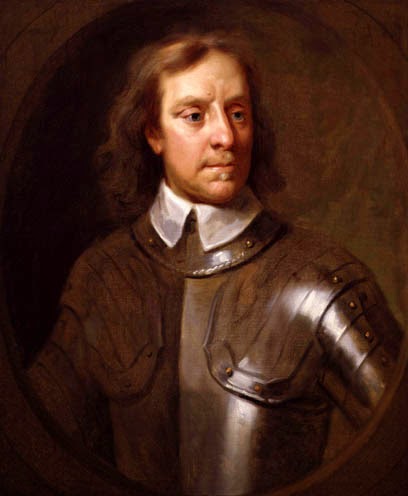
Oliver Cromwell, leader 
of the Puritan faction and 
Lord Protector of England
after the abolition of the 
monarchy

There is a lot that I want to get to.  I want to follow up on the French and Anti-Semitism theme with the connections between Anti-Semitism and Catholic “Traditionalist” movements as well as Political Monarchism and Catholic Traditionalism.  Then I have a lot of material on the dissatisfaction of the Traditional wing-nuts with Pope Francis, and the whys and wherefores of their anger for the Pope, as well as how the Pope’s political agenda—Income Inequality, Climate Change, etc—are fueling the neo-traditionalist anger towards him.  I still have two more posting’s on the Pope’s Christmas message to the Curia.  And I have yet to finish my series on the Katholic Krazies.  And in the midst of all this, Pope Francis and others keep making the news. 
But let’s go back, at least for today, to my Church of England series.  I bit off more than I could chew when I picked that topic, but we are too far into it to abandon it and while it elicits fewer hits than my occasional skewering of Cardinal Burke and other primping prelates, it has a committed and loyal leadership to keep letting me know how much they appreciate it.
So we left off with the English Civil War. Parliament abolished episcopacy (government by bishops) in 1646 and the monarchy in 1649.  (James I was right: no bishop, no king.)  With the abolition of bishops, the Church of England became Presbyterian in government, but would actually best be described as what we Americans know as “Congregationalist.”  The Book of Common Prayer and its liturgical forms were discarded in favor of The Directory For Public Worship which was borrowed from the Scots Tradition established by John Knox almost a century before.  The purpose was to purify any elements of “Romish” doctrine, practice, or superstition from Reformed worship.  The “rule of thumb” was that for anything to be done in public worship, there must be an explicit warrant for it in the New Testament.  This rule, while applied strictly, was also applied somewhat uncritically as historical primitive church practice was, in fact, little known in the 17th century and there was often a sort of sentimental projection backwards of a certain ideology/idealism onto a romanticized primitive Church.   Archbishop Laud’s restoration of altars (usually wooden tables but covered with rich hangings) in the former chancels, along with cross and candles that had re-appeared in some places, were all done away with, while plain wooden communion tables re-appeared.  Where copes or even surplices had been used, they too were suppressed and the ministers wore simply their black academic gown.  There was no pronouncing of the absolution after a confession of sinfulness, no recitation of the doxology, no use of the Nicene or Apostles Creeds, no liturgical seasons (Advent, Lent, etc.)  or feasts (including Christmas, Easter, Pentecost).  There was no Confirmation service, no provision for Holy Communion for the sick, and no giving of a ring in marriage.  The only hymns that could be sung were metric psalms, and some were opposed to even these.  In fact, some ministers or congregations refused to use even the Lord’s Prayer, rejecting any set words for prayer.  There was no burial service lest the appearance be given of prayers for the dead, but the minister could give a sermon on the occasion of a funeral admonishing the living to keep in mind their impending call to stand before the Throne of Judgment. and civic honors could be paid to the deceased according to the dead person’s station.    Baptism was never to be administered privately but only on the occasion of Sunday Worship and even marriage were ideally to be part of the Sunday Service.  Sunday Worship—indeed even daily worship where it was held—was to consist of scripture readings—an entire chapter of the Old Testament followed by an entire chapter of the New (and the books of the bible were to be read in sequence and not according to the abolished seasons and feasts)—followed by a long prayer by the pastor.  This, in turn, was followed by the sermon which lasted an hour or more and was to be an exhortation for people to repent from their sinful ways.  Finally there was to be a collection for the poor.  Holy Communion was to be administered “frequently” but this usually was interpreted to mean quarterly—every three months.  Holy Communion, when it was held, followed the sermon.  The minister would then read Saint Paul’s account of the Eucharistic Tradition that he himself had received (I Corinthians 11:23-26).  This was followed by a fairly long prayer asking, among other things, that through these gifts spiritually received the communicants might dwell in Christ and Christ might dwell in them.  The bread and wine were then distributed to those congregants who had remained after the morning sermon and had been approved by the minister for Holy Communion.  In some of the more rigidly administered churches communicants sat around the communion table set up in the front of the church; in others they received bread and wine passed to them in their pews.   The Anglican posture of kneeling for Holy Communion was done away with in favor of an insistence that communicants remain seated. 
Even in the more Protestant parts of the nation—London, Norwich, the south-east—the changes were not well taken by the majority of the people.  Indeed England was somewhat unsettled both politically and religiously under Oliver Cromwell’s being “Lord Protector.”  Conformity was enforced by military strength and where it could not be so enforced—rural areas, the north, and the west, the Prayer Book Liturgy—albeit without the Laudian accouterments—often surreptitiously survived.  The Burial Office was particularly popular as the official rites had been so stripped down that many people felt totally unconsoled by them.
Despite the radical turn to the most severe Protestantism, it was not far enough for some.  Even before the Civil War there was a faction among the English Puritans that began to hold the necessity of a faith-filled encounter with Christ that must precede baptism.  This idea that the believer must first accept Christ and commit himself to Christian discipleship before one could be baptized obviously ruled out infant baptism—a practice of the Church from very early in its history.  While there had been Anabaptist movements (Anabaptist from the Greek ἀναβαπτισμός, re-baptized or baptized over again) in Germany from the time of Thomas Müntzer (preached 1521-1525)  Anabaptist doctrine had spread widely on the continent throughout the sixteenth century, its first appearance for the English was in the English émigré community in Amsterdam where one-time Anglican Priest, John Smyth, had broken with the Church of England because he was opposed to the idea of a State Church, that is the political control of the State over a Church.  By 1609 Smyth had come to believe that one must acknowledge Christ as Lord and Savior before one could be baptized.  Smyth re-baptized himself and then his followers.  Smyth never returned to England and in fact sought to join the Mennonites, a religious community in Holland (and elsewhere in Europe) that also practiced believer’s baptism.  After Smyth’s death, however, a portion of his flock returned to England.  Other Anglicans, all of the Puritan faction, also came to hold believer’s baptism.  John Spillsbury was a shoemaker who belonged a church that followed Smyth’s teaching that the Church must be independent of the State (they were known as Separatists)  and he also held for infant baptism.  In 1638, on the eve of the English Civil War, Spillsbury set up his own church which not only practiced believer’s baptism but insisted that baptism must be by full immersion, that is the baptized person must be brought totally under the water and not simply have it poured over him or be sprinkled with it. 
Like others of the extreme Puritan wing, these Baptists (as they came to be known) rejected any of the liturgical practices of the Church of England which they saw as holdovers from the Church of England’s Catholic past.  Worship was totally without form and spontaneous.  Some even forbad the reading of the scripture during worship, claiming that since the scriptures were being read in translation they were “the work of men and not of God.”  Hymns were forbidden, though psalms—including those in metrical form—could be sung.  There were to be no organs in their meeting houses, nor candles (except, of course, for lighting), crosses or other ornaments.  The ministers wore plain street clothing or, if they had matriculated at university, their gown.  Baptism and Holy Communion were the only “ordinances” (the word “Sacrament” being too Catholic). 
With the collapse of the Episcopacy in 1646, such chaos resulted in the Church of England that the Baptist congregations were not only, for the most part, unharmed but unnoticed.   They looked like the Puritan (Congregationalist) congregations in every respect except for their mode of baptism.  Consequently they were able to grow unmolested.  They never became particularly big in England, though they did have considerable success in Wales.  Meanwhile, their ideas spread to the North American colonies, and especially Puritan Massachusetts, where they did meet with persecution from the predominant Congregationalists in the colony.  Massachusetts dissidents fled to Rhode Island where they shaped the colony in a slightly different way, arguing both for freedom of conscience and separation of Church and State.  The Baptist movement in North America would only really take off in the Second Great Awakening, a religious revival movement in the early 19th century, but American Baptists have always been stalwarts on the separation of Church and State.  Classically Baptists have also been in favor of freedom of religion but in the current culture war environment that is eroding in some quarters.  More on the Baptists at some future time.  

Thursday, January 15, 2015

History of the Anglican Church CV

Charles I at his trial

To pick up on the English Civil War and its impact on the development of Anglicanism, after only a few years following his accession to the throne in 1625, Charles was losing popular support.  Archbishop Laud’s High Church liturgical reforms went too far for many who had accustomed themselves to Calvinist austerity in worship and resented the innovations.  (There are always those who resist and resent liturgical development, even when it is to improve the theological footing of the Liturgy.)   His wars were costly and his failure to win them a national embarrassment.  His dependence upon his favorites for council and his opposition to Parliament left the people feeling unheard and unrepresented.  Charles also had a program to drain “The Fens”—the marshy swamplands in eastern England.  The program would enrich his friends who were investing in it with hopes of converting the swamps to good rich farmland, but disrupt the lives of the locals who for centuries had made their living fishing and wildfowling.  The King and Parliament were in a political tug of war with the Commons reflecting the mood of the ordinary people, especially the merchant class of the South and South East (including London) and the King representing the views of the landed aristocracy. 
By the beginning of 1642 as Parliament became more assertive in their resistance to the King’s policies, and the King felt himself losing control, Charles appeared at the House of Commons with 400 soldiers to arrest five members of the House whom he perceived to be the leaders of the opposition to his policies.  Charles was angry about the execution of Lord Wentworth, his Lord Deputy for Ireland and fearful about the fate of his Archbishop of Canterbury, Laud, whom Parliament had imprisoned.  Wentworth had only carried out the King’s requirements to raise funds in order to avoid having to convoke Parliament to impose new taxes and Charles was in sympathy with Laud’s ceremonial approach to worship.  The King’s failure to arrest the opposition left him fearful of his safety and the safety of his family and fled London.  The rumors—quite probably true—were that that the Queen, Henrietta Marie, had persuaded Charles to arrest the Parliamentarians.  It was a disaster.  The five members of the House had been pre-warned and fled before the King arrived.  The King’s coming into the House and intimidating it with his 400 guards was seen to be a gross violation of Parliamentary right and no monarch has since been permitted to enter the House of Commons. 
After staying briefly first at Hampton Court and then Windsor, Charles sent his family to safety in France and proceeded to the North of England where he hoped to find support among the more traditional nobility and gentry.  Meanwhile the country polarized with some cities and towns declaring support for the King and others for Parliament.  This put King and Parliament at war with each other—civil war.  Painting the picture with somewhat of a broad brush, the King controlled Wales, the West, the Midlands and the North. Parliament held the allegiance of London, the South, the East and the Navy.  Charles established his capital at Oxford. 
It is beyond the point of this blog to go through the Civil War battle by battle, suffice it to say that as the war raged back and forth over the next five years, the King lost more and more and Parliament was more and more victorious.  After being besieged in Oxford, Charles fled and sought refuge with the Scots army at that time in the Midlands.  The Scots, firm in their Presbyterian belief and angry with the King for his attempts to force Anglicanism on them, betrayed Charles and sold him to the Parliamentary forces in January 1647. 
As England devolved from monarchy and episcopacy into what became political tyranny and religious chaos, the Church of England not only split along the High Church/Puritan fault line, it shattered into numerous religious sects.  With the execution of Charles in 1649, England was declared to be a “Commonwealth” with a Republican form of government.  With the abolishment of bishops in 1646 the Church officially became a Presbyterian Church.  The 39 articles—the key statement of Anglican doctrine—was replaced by the Westminster Confession; the Book of Common Prayer by the Directory for Public Worship adopted from the Church of Scotland.  I say “Presbyterian” because its ecclesial polity was Presbyterian (as different from Episcopalian—that is governed by bishops.)  As opposed to Episcopal government—government by a bishop with his officials such as Archdeacons and Deans, in the Presbyterian system local churches are governed by a body of elders (presbyters).  Churches were no longer gathered in a diocese under a bishop but governed by an assembly of presbyters known as the presbytery or classis.   I want to be careful to nuance this correctly but when I say the Church of England was Presbyterian, I am not correlating it to modern Presbyterianism, but simply to say that it adopted the Presbyterian form of organization typical of most Churches in the Reformed (as opposed to Catholic, Orthodox, or Evangelical [aka Lutheran]) traditions.  In fact both today’s English Presbyterians and Congregationalists would find in the time of the Commonwealth not their origins (they date back as movements within the Church of England to the late 16th century opposition to the Prayer Book and to Bishops) but certainly their coming of age.  The Church of England during the Commonwealth (or as it is sometimes called the Interregnum)  was a Reformed Church that was home to groups that would later distinguish themselves from one another as “Presbyterian” or “Congregational.”  And indeed, in 1972 the majority of Congregational Churches in England united with the Presbyterian Church of England to form the United Reformed Church. 
This Presbyterian/Congregationalist Church of England satisfied the Puritans who had long wanted to get rid of Bishops and the Prayer Book and Christmas and other “popish” traditions. Yes, Christmas was outlawed in England from 1647 until the restoration of the monarchy under Charles II in 1660—giving rise to the popular rhyme:
Now thanks to God for Charles return
Whose absence made old Christmas mourn
For then we scarcely did it know
Whether it Christmas were or no
But as I said, the Church did not split in two, it shattered.  The Puritan faction was not sufficiently radical for tens of thousands who found expression for their faith—or their psychosis—in dozens of far more radical groups ranging from the Anabaptists to the Diggers to the Fifth Monarchists to the Sabbatarians to the Quakers to the Ranters.  We will look at some of these groups in the future postings.  Suffice it to say that what had once been one Church with a lot of factional tension now became dozens of sects ranging from the respectable to the totally out of control.  While the Church of England had up to this time (quite unofficially) encompassed a wide variety of theological opinions and forms of worship, these various groups now broke apart into a wide variety of sects that, like Humpty Dumpty, never be put back together again.  Suffice it to say for the purposes of this blog, that the traditional Church of England, a National and Episcopal Church, ceased to exist.  It would be restored in 1660 along with the monarchy, but never again would it encompass the almost universal composite of the English people.