Showing posts with label Separation of Church and State. Show all posts

Monday, February 2, 2015

Foundations of the Church of England CVI


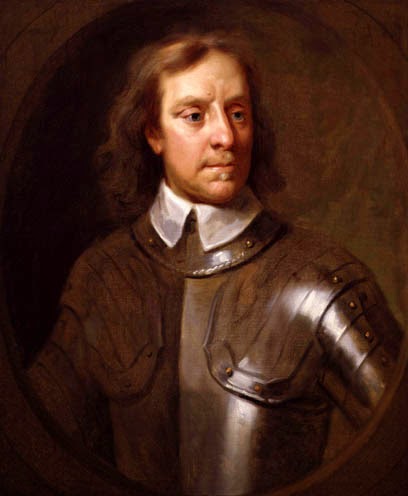
Oliver Cromwell, leader 
of the Puritan faction and 
Lord Protector of England
after the abolition of the 
monarchy

There is a lot that I want to get to.  I want to follow up on the French and Anti-Semitism theme with the connections between Anti-Semitism and Catholic “Traditionalist” movements as well as Political Monarchism and Catholic Traditionalism.  Then I have a lot of material on the dissatisfaction of the Traditional wing-nuts with Pope Francis, and the whys and wherefores of their anger for the Pope, as well as how the Pope’s political agenda—Income Inequality, Climate Change, etc—are fueling the neo-traditionalist anger towards him.  I still have two more posting’s on the Pope’s Christmas message to the Curia.  And I have yet to finish my series on the Katholic Krazies.  And in the midst of all this, Pope Francis and others keep making the news. 
But let’s go back, at least for today, to my Church of England series.  I bit off more than I could chew when I picked that topic, but we are too far into it to abandon it and while it elicits fewer hits than my occasional skewering of Cardinal Burke and other primping prelates, it has a committed and loyal leadership to keep letting me know how much they appreciate it.
So we left off with the English Civil War. Parliament abolished episcopacy (government by bishops) in 1646 and the monarchy in 1649.  (James I was right: no bishop, no king.)  With the abolition of bishops, the Church of England became Presbyterian in government, but would actually best be described as what we Americans know as “Congregationalist.”  The Book of Common Prayer and its liturgical forms were discarded in favor of The Directory For Public Worship which was borrowed from the Scots Tradition established by John Knox almost a century before.  The purpose was to purify any elements of “Romish” doctrine, practice, or superstition from Reformed worship.  The “rule of thumb” was that for anything to be done in public worship, there must be an explicit warrant for it in the New Testament.  This rule, while applied strictly, was also applied somewhat uncritically as historical primitive church practice was, in fact, little known in the 17th century and there was often a sort of sentimental projection backwards of a certain ideology/idealism onto a romanticized primitive Church.   Archbishop Laud’s restoration of altars (usually wooden tables but covered with rich hangings) in the former chancels, along with cross and candles that had re-appeared in some places, were all done away with, while plain wooden communion tables re-appeared.  Where copes or even surplices had been used, they too were suppressed and the ministers wore simply their black academic gown.  There was no pronouncing of the absolution after a confession of sinfulness, no recitation of the doxology, no use of the Nicene or Apostles Creeds, no liturgical seasons (Advent, Lent, etc.)  or feasts (including Christmas, Easter, Pentecost).  There was no Confirmation service, no provision for Holy Communion for the sick, and no giving of a ring in marriage.  The only hymns that could be sung were metric psalms, and some were opposed to even these.  In fact, some ministers or congregations refused to use even the Lord’s Prayer, rejecting any set words for prayer.  There was no burial service lest the appearance be given of prayers for the dead, but the minister could give a sermon on the occasion of a funeral admonishing the living to keep in mind their impending call to stand before the Throne of Judgment. and civic honors could be paid to the deceased according to the dead person’s station.    Baptism was never to be administered privately but only on the occasion of Sunday Worship and even marriage were ideally to be part of the Sunday Service.  Sunday Worship—indeed even daily worship where it was held—was to consist of scripture readings—an entire chapter of the Old Testament followed by an entire chapter of the New (and the books of the bible were to be read in sequence and not according to the abolished seasons and feasts)—followed by a long prayer by the pastor.  This, in turn, was followed by the sermon which lasted an hour or more and was to be an exhortation for people to repent from their sinful ways.  Finally there was to be a collection for the poor.  Holy Communion was to be administered “frequently” but this usually was interpreted to mean quarterly—every three months.  Holy Communion, when it was held, followed the sermon.  The minister would then read Saint Paul’s account of the Eucharistic Tradition that he himself had received (I Corinthians 11:23-26).  This was followed by a fairly long prayer asking, among other things, that through these gifts spiritually received the communicants might dwell in Christ and Christ might dwell in them.  The bread and wine were then distributed to those congregants who had remained after the morning sermon and had been approved by the minister for Holy Communion.  In some of the more rigidly administered churches communicants sat around the communion table set up in the front of the church; in others they received bread and wine passed to them in their pews.   The Anglican posture of kneeling for Holy Communion was done away with in favor of an insistence that communicants remain seated. 
Even in the more Protestant parts of the nation—London, Norwich, the south-east—the changes were not well taken by the majority of the people.  Indeed England was somewhat unsettled both politically and religiously under Oliver Cromwell’s being “Lord Protector.”  Conformity was enforced by military strength and where it could not be so enforced—rural areas, the north, and the west, the Prayer Book Liturgy—albeit without the Laudian accouterments—often surreptitiously survived.  The Burial Office was particularly popular as the official rites had been so stripped down that many people felt totally unconsoled by them.
Despite the radical turn to the most severe Protestantism, it was not far enough for some.  Even before the Civil War there was a faction among the English Puritans that began to hold the necessity of a faith-filled encounter with Christ that must precede baptism.  This idea that the believer must first accept Christ and commit himself to Christian discipleship before one could be baptized obviously ruled out infant baptism—a practice of the Church from very early in its history.  While there had been Anabaptist movements (Anabaptist from the Greek ἀναβαπτισμός, re-baptized or baptized over again) in Germany from the time of Thomas Müntzer (preached 1521-1525)  Anabaptist doctrine had spread widely on the continent throughout the sixteenth century, its first appearance for the English was in the English émigré community in Amsterdam where one-time Anglican Priest, John Smyth, had broken with the Church of England because he was opposed to the idea of a State Church, that is the political control of the State over a Church.  By 1609 Smyth had come to believe that one must acknowledge Christ as Lord and Savior before one could be baptized.  Smyth re-baptized himself and then his followers.  Smyth never returned to England and in fact sought to join the Mennonites, a religious community in Holland (and elsewhere in Europe) that also practiced believer’s baptism.  After Smyth’s death, however, a portion of his flock returned to England.  Other Anglicans, all of the Puritan faction, also came to hold believer’s baptism.  John Spillsbury was a shoemaker who belonged a church that followed Smyth’s teaching that the Church must be independent of the State (they were known as Separatists)  and he also held for infant baptism.  In 1638, on the eve of the English Civil War, Spillsbury set up his own church which not only practiced believer’s baptism but insisted that baptism must be by full immersion, that is the baptized person must be brought totally under the water and not simply have it poured over him or be sprinkled with it. 
Like others of the extreme Puritan wing, these Baptists (as they came to be known) rejected any of the liturgical practices of the Church of England which they saw as holdovers from the Church of England’s Catholic past.  Worship was totally without form and spontaneous.  Some even forbad the reading of the scripture during worship, claiming that since the scriptures were being read in translation they were “the work of men and not of God.”  Hymns were forbidden, though psalms—including those in metrical form—could be sung.  There were to be no organs in their meeting houses, nor candles (except, of course, for lighting), crosses or other ornaments.  The ministers wore plain street clothing or, if they had matriculated at university, their gown.  Baptism and Holy Communion were the only “ordinances” (the word “Sacrament” being too Catholic). 
With the collapse of the Episcopacy in 1646, such chaos resulted in the Church of England that the Baptist congregations were not only, for the most part, unharmed but unnoticed.   They looked like the Puritan (Congregationalist) congregations in every respect except for their mode of baptism.  Consequently they were able to grow unmolested.  They never became particularly big in England, though they did have considerable success in Wales.  Meanwhile, their ideas spread to the North American colonies, and especially Puritan Massachusetts, where they did meet with persecution from the predominant Congregationalists in the colony.  Massachusetts dissidents fled to Rhode Island where they shaped the colony in a slightly different way, arguing both for freedom of conscience and separation of Church and State.  The Baptist movement in North America would only really take off in the Second Great Awakening, a religious revival movement in the early 19th century, but American Baptists have always been stalwarts on the separation of Church and State.  Classically Baptists have also been in favor of freedom of religion but in the current culture war environment that is eroding in some quarters.  More on the Baptists at some future time.  

Tuesday, October 15, 2013

When Religion Goes Bad


I was very disappointed that Malala Yousafzai didn’t wind the Nobel Peace Prize.  I can’t think of anyone better to symbolize the victory of Peace over Violence in our contemporary world.  But last week when I saw Diane Sawyer interviewing a group of Muslim women and heard them say that Malala should “return to Islam” and express their opinions that non-Muslim women like Ms. Sawyer are “oppressed” because they don’t live “under God’s will” but as “beholden to the slavery of their own desires” I saw not only the danger of radical Islam but the danger of radical religion of any stripe. 
Several days ago The New York Times carried a story of two Rabbis who—for a hefty fee—would arrange for men to be kidnapped and tortured until they gave their wives a get (a religious bill of divorce, required by Orthodox interpretation of the Mosaic Law for a woman to be released from marriage).  And again, like listening to those Muslim women, I cannot but wonder about what religion   devolves into among those who consider themselves “orthodox.”  Kidnapping and torture are a legitimate means to carry out compliance with the Mosaic Law?  And I read a story on the internet a few days ago how Orthodox Jewish settlers had not only stolen the land from Arab families in the West Bank but adding insult to injury, defaced their mosque.  And this is done because Jewish extremists make the claim that “God has given this land” to them.  The Name of God is blasphemed when it is used to justify such atrocities just as it was blasphemed when Christians used horror stories of child kidnappings and murders to instigate pogroms against the Jews of Europe. 
Extremist Hindus murder Muslims and Christians in India in the name of religious teachings that would demand religious conformity to all ethnic Indians.  And Buddhists—despite the clear teachings of the Buddha—massacre Muslims in Myanmar.  No wonder so many in our modern world just walk away in bewilderment and even disgust from religion all together. 
And sadly there is a Catholic Taliban too that would impose on all in our country, of whatever religion or of no religion, the dictates of the Church when it comes to matters of marriage or reproduction.  There are those who would bind not only the consciences but the freedom of others to rules of conduct whose only basis for authority are religious teachings. 
I am not saying that there are not moral standards and that Christianity’s moral law is in any way arbitrary.  I am only saying that any religion that compels adherence of unbelievers to its creeds or to its specific moral precepts is essentially a false way of life.  As Christians we have a mission to convert hearts, not to impose laws.  Winning hearts is a far more challenging mission than imposing laws, but it is the mission Christ gave to his Church and the only one we do with his blessing.


Thursday, May 9, 2013

A Contemporary Reflection on the Becket Controversy

A Becket-in-the-making?
Cardinal Francis George
of  Chicago
Cardinal George’s dire forecast that his successors would die martyrs for the faith triggered me to write these reflections on the contemporary Church in the United States the martyrdom of Thomas Becket—who died not for the faith but to preserve the Church’s privilege of exemption from the Law.  Ironically I am  and have long been a devotee of Becket.  Given the understanding of the Church’s position in the 12th century, I realize that Becket acted on a principle he cherished as a matter of faith.  However in the 20th century none of us would hold to that same principle—well probably Cardinal Law would—that the Church is not answerable to any authority but its own when it comes to crimes by the clergy.  Of course Becket lived in a time when the Church was consolidating its power; today we are somewhat more suspicious about power and reluctant to see it go unchecked, even (and especially) in the Church. 
I have referred several times before to the insight offered by the late Cardinal Avery Dulles in his book, the Catholicity of the Church, that the first thousand years of the papacy were about witness; the second thousand about power; and the third thousand will be about service.  I agree with Dulles but I think the paradigm can be extended from the papacy to the Church itself and this would mean that Catholicism is at one of those great shifts in the theological tectonic plates as we move from the template of power to the template of service.  Little tremors have signaled the shifting ground ever since Bishop Emil de Smedt of Bruges declared in the opening session of Vatican II that the Church had to renounce the “clericalism, juridicism, and triumphalism” of the past and meet the modern world on its own terms.  Paul VI abolished the papal court, drastically simplified the costuming of prelates to be rid of the princely accoutrements.  Religious women, moving out of their large motherhouses, put aside their medieval garb and institutional ministries to undertake hands-on service of abused women, abandoned children, the homeless, the aged, the immigrant, and the mentally ill.  Jesuits and de la Salle Christian Brothers opened up inner city Christo Rey Schools to give the children of the poor an educational leg-up that would let them compete successfully for placement in the academies run by their orders.  Religious Orders of both men and women started NGO’s and Institutes and outreach centers that would interface them with the rank injustices that underlay our social structures on the local, national, and international levels.  New model bishops, noted for their simplicity of style and humble service, emerged in the Church in such figures as Dom Helder Camara of Recife Brazil, Remi de Roo of Victoria,  Bernard Topel of Spokane, Oscar Romero of San Salvador, and Thomas Gumbleton (auxiliary) of Detroit.   But it was an Albanian nun who most personified this new attitude, Mother Theresa of Calcutta, and captured the attention of the world by her devoted care of the poorest of the poor.  But it has not been a highway without its detours, roadblocks, speed bumps and potholes. 
There has been a strong current among social conservatives pushing a restorationist agenda in the Church to preserve the privilege and power of past centuries.  Recognizing that the liturgical changes introduced under Paul VI in the 1970 missal have probably been the strongest factor in awakening the social consciousness of the Catholic faithful, some bishops, many priests, and about five percent of the active laity have pushed to restore the pre-conciliar rites along with the elaborate costuming of prelates abolished by Paul VI.  There has been a revival of neo-traditionalist art and architecture in many Catholic parishes that focuses on splendor and material display.  Restorationist prelates such as Cardinal Raymond Burke, Cardinal Bernard Law, and Archbishop William Lori pushed for measures to rein in the religious sisters who have devoted themselves to the service of the poor and disenfranchised in our society.  Ecumenical and inter-religious dialogue and cooperation have come in most places to a grinding halt as Pope Benedict XVI changed the ground-rules from a tone of mutual cordiality and respect to a high-handed arrogance combined with a disdain for any whose understanding of Truth differed from the Catholic norm. 
Most troubling is that, at least on the American scene, the institutional dimension of the Catholic Church ceased speaking up for the least of Christ’s brothers and sisters and began shrill denunciations of those in our society who disagreed with the Church on two issues, abortion and same-sex marriage.  Catholic voices—some bishops, many priests, and a bloc of laity have called for the civil law to enshrine Catholic moral doctrine on these issues regardless of the fact that the majority of Americans do not agree with the moral principles on which the Catholic Church builds her case.  Catholics in public life have been threatened with Church censures if they did not do their jobs according to the directions of the hierarchy.  Catholics who voted for politicians who would not cave in to hierarchic pressure were threatened with censure and punishment if they did not follow the directions of the clergy in casting their ballots.  The Church was seen as using its moral authority to enforce a political agenda and that is not playing according to American Constitutional tradition. 
Fifty three years ago, a Catholic running for President spoke to a group of Protestant clergy declaring

I believe in an America where the separation of church and state is absolute; where no Catholic prelate would tell the President -- should he be Catholic -- how to act, and no Protestant minister would tell his parishioners for whom to vote; where no church or church school is granted any public funds or political preference, and where no man is denied public office merely because his religion differs from the President who might appoint him, or the people who might elect him.
I believe in an America that is officially neither Catholic, Protestant nor Jewish; where no public official either requests or accept instructions on public policy from the Pope, the National Council of Churches or any other ecclesiastical source; where no religious body seeks to impose its will directly or indirectly upon the general populace or the public acts of its officials, and where religious liberty is so indivisible that an act against one church is treated as an act against all.

At the time that man spoke, the Catholic voice stood behind him. It would be our first—and to date only—opportunity to have one of our own in the White House.  But today, many voices in our Church think that prelates should tell politicians how to act; Catholic pastors have no difficulty in telling their parishioners for whom to vote.  Today we see a religious body seeking to impose its will upon the general populace and the public acts of our elected officials. 
I don’t believe this means that Catholics need to be silent about abortion or about same-sex marriage—or about gun control, capital punishment, universal health-care, immigration, or the host of other hot-button political items that have religious implications.  I do believe, however, that our role is to educate and convince the electorate of the truth of our position, not to unilaterally impose our values on the larger society.  We can, as can any citizen or group of citizens, use the political system to further our convictions but we have no right to hijack it, even for the good ends we desire. 

Monday, July 30, 2012

The Not So Secular Olympic Ceremonies

Guide Me, O Thou Great Redeemer!
The "Queen" arrives at Olympic Stadium.
I mentioned in yesterday’s entry the fascination of a billion people with the opening “liturgy” of the Olympics as compared and contrasted with the dwindling and graying congregations at Sunday Mass.  But what really drew my attention to the opening ceremonies of the Olympics was not the questions it raises about liturgy but what it said about British secularism as differentiated from American secularism.  So, did you catch in the opening sequence Sir Hubert Parry’s fabulous hymn based on William Blake’s poem Jerusalem?  

And did those feet in ancient time.
Walk upon England’s mountains green:
And was the holy Lamb of God,
On England’s pleasant pastures seen!

And did the Countenance Divine,
Shine forth upon our clouded hills?
And was Jerusalem builded here,
Among these dark Satanic Mills?

Bring me my Bow of burning gold;
Bring me my Arrows of desire:
Bring me my Spear: O clouds unfold!
Bring me my Chariot of fire!

I will not cease from Mental Fight,
Nor shall my Sword sleep in my hand:
Till we have built Jerusalem,
In Englands green & pleasant Land

And Blake’s “Jerusalem” was not all.  Checking the playlist I could not find the John Hughes/William Williams Welsh hymn, “Guide Me O Thou Great Redeemer” a perennial favorite of the Royals, but I know that I heard it—the refrain: “feed me till I want no more” is an inside joke among several of us and it caught my attention, plus the tune itself is a great melody. Even as the Blake lyrics represented England, and “Flower of Scotland” (another of my favorites) represented the Northern Kingdom, I suspect that the Hughes/Williams piece was a tip to Wales.  All well and good in Britain, but could you imagine if two ardent Christian hymns were ever included in a civic ritual in the United States?  People would be screaming about Separation of Church and State.  Of course England doesn’t have separation of Church and State—the Church of England being by law established, but that isn’t the point.  In America we want religion and all its vestiges banished from public life, that is every religion except for the lack of religion.  Too bad, for as we saw at Danny Boyle’s spectacular, religion—all religion—has some great tunes.    And I love a good tune, religious or otherwise. 

Sunday, February 26, 2012

Reversing the Kennedy Doctrine

During the 1960 Presidential campaign, Democratic candidates John F. Kennedy—a Catholic—said in a famous talk to the Houston (Texas) Ministerium:
“I believe in an America where the separation of church and state is absolute, where no Catholic prelate would tell the president (should he be Catholic) how to act, and no Protestant minister would tell his parishioners for whom to vote; where no church or church school is granted any public funds or political preference; and where no man is denied public office merely because his religion differs from the president who might appoint him or the people who might elect him.” 
      Does anyone object to this statement—really?  Certainly, despite the desire of many in the Church for public support for parochial schools,  no Catholic voices were raised in objection when John Kennedy made this claim that religion should not have a direct role in the political process.  Now a prominent Catholic running for the American presidency does take exception?  Why has there been a switch?  Or has there—has Rick Santorum gone out on a limb—too far out on a limb—with his objection that the separation of Church is not “absolute?”  Is it a legitimate claim that he only wants to preserve the rights of religion in the “public square” or has he set up a straw-man with this argument?  Does the non-establishment clause of the First Amendment threaten believers with being pushed to the margins of the American political process?  I don’t know.  I have long thought that Mr. Santorum’s Catholicism was his own particular take on the Catholic faith; I now think his Americanism is his own particular take on our Constitutional heritage.

Sunday, January 29, 2012

Freedom from Religion and Freedom of Religion V

John Kennedy, First and Only Catholic
to serve as President of the United States
During the 1960 Presidential campaign, Democratic candidates John F. Kennedy—a Catholic—said in a famous talk to the Houston (Texas) Ministerium:


     I believe in an America where the separation of church and state is absolute, where no Catholic prelate would tell the president (should he be Catholic) how to act, and no Protestant minister would tell his parishioners for whom to vote; where no church or church school is granted any public funds or political preference; and where no man is denied public office merely because his religion differs from the president who might appoint him or the people who might elect him.
     Kennedy’s speech to the association of Protestant Ministers in 1960 is one of the landmark speeches in the history of American Church/State relationships and has stood as the defining statement of the relationship of religion and government in the American constitutional system.  In the context of the time it was meant to answer those who were afraid that a Catholic in the White House would have to take direction from his Church and it was meant to criticize those Protestant pastors who were cautioning their parishioners that a vote for Kennedy was a vote to end religious freedom in the United States.  At the time no Catholic saw a problem with this statement—indeed Catholics, clergy and laity alike, endorsed it as they saw the possibility of a Catholic being President for the first time.  As I said it has stood for fifty years as the canon of independence for politician and voter alike.  It has served as a bulwark to protect public officials from religious pressure so that they can fulfill their constitutional mandate.   That being said, I wonder how many Catholics—especially bishops and clergy—would agree with  it today?  Among the laity, Senator Santorum for one has gone on record as disagreeing.  He may be right and the Kennedy doctrine no longer stands.  He may be wrong.  But we do need to give the subject some thought.   
 

Thursday, January 26, 2012

Freedom From Religion and Freedom of Religion IV

Anti-Catholic cartoon by American polotical
cartoonist Thomas Nast (1840-1902) illustrating
fear of Catholic Takeover of the United States
Well, as we have pointed out in our last entries, the Catholic Church was opposed not only to the Separation of Church and State as outlined in the United States Constitution but opposed to the idea of religious liberty or “freedom of conscience” itself.  This put the Church square in conflict with the American constitutional tradition which Americans, including Catholic Americans, for the most part overwhelmingly embraced.  Conflict of ideologies was inevitable and finally came to a head in 1954 when the Holy See silenced Jesuit Father John Courtney Murray for his views on the subject.  In a surprising reversal of the Magisterium, however, the Magisterium itself abandoned its long-held tenet and in the 1965 Conciliar Decree Dignitatis Humanae subscribed to the principle that each person should be free to follow the directives of his or her own conscience in matters of religious belief and be granted in civil law the freedom of worship according to individual conscience.  
    Until the notoriety of the Murray silencing, most American Catholics were unaware of the conflict between the United States Constitution and Catholic Magisterial teaching.  American Protestants, however, knew it. Anti-Catholicism in the nineteenth and early twentieth centuries was primarily linked to anti-immigrant sentiment.  If you look at the right hand column where it is marked “Labels” you will see thirteen postings on “anti-Catholicism.”  One of the reasons that so many Americans feared the growth of the Catholic Church in the American Republic is that they saw that Catholicism posed a danger to American liberties.  We ridicule the idea that Catholics, if they attained a political majority, would take away Freedom of Religion in the United States—but remember, that is precisely what the papacy expected them to do.  I doubt it ever would have come to that.  I think Americans of whatever religious faith make a clear distinction in their public and political life between one’s religious convictions and the commitment we have to the freedoms outlined in the Bill of Rights.  While we might vote our faith, and while our electoral choices should—like all decisions in our lives—reflect the values our Christian and Catholic faith has given us, I think the civic values of the American Constitutional tradition are a firewall against religious extremism. 
     Now although Catholic doctrine has changed to embrace freedom of conscience, this question does have relevance today.  Just as Catholics can expect neither their faith nor the canon law of their Church to determine the laws of the Nation or of any State, County, or local jurisdiction, we must also insist that no other creed or religious law find its way into public legislation.  There must be no more room for Sharia than there is for Canon Law or the Mosaic Law in public life.  Individuals are free, indeed should be encouraged, to follow religious precepts in their individual lives and within the framework of their particular religious community,  but the anti-establishment clause of the first amendment protects us from having any one religious philosophy imposed on the American people.    
      Sharia law might be the obvious threat today but there are Catholics who still want to see Catholicism established as the official religion of the United States.  I used to think they were all crazies like Solange Hertz, a Leesburg Virginia doyenne with more bats in her belfry than Hogwarts at Halloween but then a couple of years ago along came Michael Voris from Real Catholic TV suggesting that what we need now is a Catholic Monarchy to replace our Republican Government.  Fortunately Voris has no support from the Church for his bizarre ideas and little influence among everyday Catholics but he is articulate and, adjusting for the observation that his reality coordinates are off kilter, within his own world of factoids he invariably has a well thought out and philosophically consistent patter.   Indeed he is not alone in his parallel universe.  There is a considerable faction among the neo-traditionalists who reject the Second Vatican Council whose fundamental opposition to the Catholic Church is not about the liturgy but about the Conciliar Decrees, especially Dignitatis Humanae and its assertion of Freedom of Conscience.  In the end, the ascendancy of Catholic Law over the larger society would be as fatal a blow to the Human Dignity with which our Creator has endowed us as would be Sharia law.  We may be more familiar with Catholic theology and law than Sharia Law, and Catholic hegemony might require less adjustment on our part, but are we willing to yield to any outside force the sovereignty of our conscience, the consciences of which God has made us each a steward and for which God will hold us accountable?
     Religion cannot be banned from public life—nor should it be. We are guaranteed the free exercise of religion.   There is no effective way in a democracy to keep religion out of public life because religious citizens will (hopefully) have their political philosophies shaped by their religious faith.  Even non-believers have their attitudes and values shaped by their non-belief.  Religion (or lack thereof) will all come to the lawmakers’ table but it must only come to the table through the agency of the individual citizens and never through the direct influence of religious institutions over government.   And if the Churches (and Synagogues and Mosques and various Atheistic Associations) are performing their role in raising the consciousness of their individual members, making convincing arguments for the political consequences of their beliefs, those beliefs will be reflected in the democratic process.   But the attempt to coerce believers into voting blocs sorted by religion undermines the constitutional processes.  I expect my pastor to tell me that abortion is wrong.  I expect my pastor to tell me that same-sex marriage is not consistent with our Christian understanding of matrimony.  I expect my pastor to tell me that we have a responsibility to provide for the needy and vulnerable among us.  I expect my pastor to pass on the Church’s teaching regarding immigration and the death penalty as well as contraception and divorce. I hope my pastor will have the coglioni to tell me to vote my conscience (not my religion [collective] but  my conscience [individual]) and not my wallet.  And I hope I will have the intelligence to know the difference and the integrity to be truthful as to which is which. 

Tuesday, January 24, 2012

Freedom from Religion and Freedom of Religion III

The Tomb of Pope Leo XIII in the
Basilica of Saint John Lateran
The United States, including its Catholic citizens, was very committed to the principle of the Separation of Church and State.  The papacy was very committed to the idea that the Catholic Faith should be established by law in every nation and that other religions—and especially heretical “cults” (aka Protestants) should be proscribed.  Two trains running down tracks ultimately destined to collide.  
     The collision was to be a long time in coming however.  In a world without modern communications the American Republic was no more than a vague idea to the Papal Court.  Until the final decades of the nineteenth century, basically until people began to accustom themselves to the transatlantic cable, the American Church in its day to day operations was all but independent from Rome.  John Carroll had deliberately held communications with the Holy See to a minimum and his successors in the American episcopacy followed suite.  It was pointless to involve Rome in local decisions—before steamships for a letter to go to Rome, be considered by a congregation, and come back was at least a six month process and could easily take twice that long.  Whatever decision was needed was long past its time before the Holy See could respond.  And frankly, European bishops were no more inclined to surrender decision making to the Roman Curia were jealous of their own authority in their own dioceses.  That only began to change with the collapse of the Papal States in 1870 when the popes needed to consolidate their religious authority to compensate the diminution of prestige at the loss of the Papal States.  It was after Vatican I—and the fall of Rome to the Italian Monarchy that same year—that Rome really began to take note of the American Church and it was startled to see how “American” (i.e. non-Roman) it was.  This came to a bit of a head with Leo XIII’s 1895 Encyclical Latter, Longinqua Oceani, in which the pope declared  that the Church “ would bring forth more abundant fruits if, in addition to liberty, she enjoyed the favor of the laws and the patronage of the public authority.”  Such favor and patronage, of course, is in direct contradiction to the United States Constitution which declares in its first amendment that “Congress shall make no law regarding the establishment of religion…”   Leo further admonished the American Church that while it might have to live with the idea of separation of Church and State at least until a Catholic majority could correct the situation, it “would be very erroneous to draw the conclusion that in America is to be sought the type of the most desirable status of the Church, or that it would be universally lawful or expedient for State and Church to be, as in America, dissevered and divorced.”  In other words, the American situation of the separation of Church and State is not an ideal but an anomaly.
     It could have been worse.  Leo was, unlike his predecessors, not opposed to Republics per se.  To the rage of conservatives he encouraged French Catholics to give their support to the Third Republic which replaced the Second Empire after France’s defeat in the Franco-Prussian War.  Conservative Catholics in France wanted to restore the Bourbon monarchy and while Leo wold have preferred that, he conceded that the Republic was acceptable.  Catholicism had always seen monarchy as the ideal, the thought being that civil government should be along the lines of Divine Government and so just as God governs the world, a monarch should govern the people.  Forget this Vox Dei Vox Populi idea—it is dangerous to Church and State alike. (Vox Dei Vox Populi is Latin for The Voice of God [is found in] the voice of the people.  You can see why Popes who consider themselves the Vox Dei don’t like that idea.) 
     Fortunately it took a long time to bring this pot to a boil, but to a boil it was to come.  An American Jesuit, John Courtney Murray, was teaching at the Catholic University in Washington DC.  The experience of Christians of various faiths cooperating against the Third Reich in the years before and during World War II convinced Father Murray that the traditional anti-ecumenical policies of Catholicism and the resultant Catholic isolationism was an obsolete and a dangerous policy in a world haunted by totalitarianism.  He further came to believe that, despite the admonition of Leo XIII in Longinqua Oceani,  religious freedom as outlined in the First Amendment to the American Constitution was an ideal that should be embraced in the twentieth century.  In these ideas he was far ahead of his time—too far ahead of his time for many of his fellow Catholics who saw the ethnic and religious ghettos into which the Catholics of the early twentieth century had retreated as essential to preserve the faith.  Teaching with Father Murray at Catholic University was Monsignor Joseph Clifford Fenton, one of the most arrogant and acrimonious junior grade prelates the Church has known in its long history of arrogant and acrimonious prelates.  Monsignor Fenton was editor of the American Ecclesiastical Review.  Fenton despised Religious.  Fenton despised anyone who he considered beneath him and his monsignoral dignity him which more or less included the human race as a collective.  He was probably also a bit jealous of Murray and his popularity.  Fenton reported Murray to the appropriate Roman dicasteries and the redoubtable Alfredo Cardinal Ottaviani, head of the Sacred Congregation of the Holy Office, who silenced Murray and prohibited him from speaking or writing on the topic of Church/State relations.  These were the final years of the papacy of Pius XII who that year had suffered from a hiatal hernia requiring surgery and whose health went into a steady decline during which more and more of the papal prerogatives were assumed by curial officials such as Ottaviani.  Pius’s successor, John XXIII convoked an Ecumenical Council with the express purpose of opening the Catholic Church up to the ecumenical movement which had long been prohibited it by Popes such as Pius XI whose encyclical Mortalium Animos condemned ecumenism as undermining Catholic doctrinal hegemony.  Ottaviani insured that Fenton would be on the various commissions that were preparing the Conciliar agenda and it was planned by Ottaviani that no serious doctrinal shift, especially as regards ecumenism or freedom of conscience would be submitted to the bishops.  When the bishops assembled in the autumn of 1962 for the first session of the Council, however, they would not accept the conservative agenda, however and demanded that the schemata for the council prepared by Fenton and others be abandoned and a new agenda drawn up.  It was at this point that Francis Spellman, the Cardinal Archbishop of New York, rescued John Courtney Murray from the obscurity to which Fenton’s accusations had reduced him and brought him to the Council as Spellman’s personal theologian.  Here Murray had his revenge on his reactionary foes as the Council in its decree on Religious Freedom, Dignitatis Humanae, enshrined the basic principles of freedom of conscience and the very doctrine that Leo XIII had said should not be spread from America to the rest of the world became a universally recognized principle in Catholic teaching.  Eternal Rest to Joseph Fenton, Alfredo Ottaviani, and Leo XIII.  One of those three, despite his fear of freedom of conscience, is probably a saint.  It wouldn’t be Fenton or Ottaviani.