Showing posts with label Congregationalism. Show all posts

Wednesday, March 11, 2015

Foundations of the Anglican Church, CX

William Juxon, Archbishop
of Canterbury from 1660
until his death in 1663.

All good things must come to an end—and so too the Cromwellian dictatorship over the Commonwealth. In this posting, we will look at the restoration of Crown and Bishops in England after the Civil War and the Commonwealth. 
Oliver Cromwell died on September 3, 1658 and was succeeded as Lord Protector of the Commonwealth by his son, Richard.  Richard lacked his father’s resolve and in the face of conflict between the Army and civilian government, resigned.  The majority of the English people had grown very disillusioned with Puritan government.  The draconian laws that restricted any games or pleasure on the Sabbath, the abolition of holydays—including and especially Christmas, the wordy and drab forms of worship in the churches, the excessive Calvinistic moralism all combined to wear down even the dour English.  With the resignation of Richard Cromwell as Lord Protector and the aimless policies of the Council of State—the group that had served as the “Privy Council” to Cromwell Senior and Cromwell Junior, the administration of government began to implode.  The office of Lord Protector was replaced by a seven (later eleven) member “Committee of Safety.” This arrangement lasted only two weeks.  Fighting broke out in England as the Royalists under George Booth began to push against Parliamentarian government.  General John Lambert defeated Booth’s army and tried to put down the rebellion but Cromwell’s governor of Scotland, George Monck, saw the inevitable end of the Commonwealth and led his forces to defeat Lambert.  Monck entered into secret communication with Charles II, son of the “martyred” Charles I, who issued the Declaration of Breda from his exile in the Spanish Netherlands.  This declaration promised a general pardon for all involved in the rebellion against the monarchy, assured all who had purchased or legally obtained property during the Cromwell years that they would retain ownership, and finally promised payment of back pay to the army and guaranteed all officers that they would continue to serve under the monarchy as they had under the Commonwealth.  Eight weeks later Charles was back in England and on the Throne. 
One of the first concerns was to restore the Church to its former status.  In 1662 Parliament passed an act of Uniformity imposing a new Prayer Book and requiring ordination by a bishop for all clergy.  Those who had been ordained according to Presbyterian polity during the Commonwealth were required to submit to re-ordination by a bishop.  Approximately 2000 clergy refused and lost their livings.  The Act of Uniformity also imposed a new Book of Common Prayer upon the English Church.  Anglicans and Presbyterians had met for the Savoy Conference in 1661 but in the end were unable to agree on a liturgy acceptable to both sides. The failure to agree on a liturgy and the disenfranchisement of those clergy who would not accept Episcopal Ordination (or re-ordination in the case of those already ordained during the period in which the episcopacy was abolished from 1646 until 1660) led to a final separation of the Presbyterian/Congregationalist faction in the Church of England from the Anglican/Episcopal faction.  Those who broke with the Established Church were referred to as non-Conformists (because they would not “conform” to the official rites) and included Presbyterians, Congregationalists, and Baptists.  (The Methodists, originally a 18th century movement within the Church of England also joined the non-Conformists when it broke with the Anglican Church.  More will be written on that in later posts.)
The Episcopacy was restored in the Church of England in 1660 and William Juxon, who had been Bishop of London before the suppression of Episcopacy in 1646 was named Archbishop of Canterbury, thus guaranteeing continuity in lineage and Apostolic Succession (at least according to Anglican perspectives) with the pre-Civil War bishops.  Similarly Accepted Frewen (yes, his first name was ‘Accepted’—that is the sort of things evangelicals do to their children), one-time bishop of Litchfield and Coventry before the Civil War, was named to York guaranteeing the succession in the Northern Province as well. 
In doing some background for this entry I found out that George Montaigne who served briefly as Archbishop of York before the Civil War and previously held the sees of Lincoln, London, and Durham had, among his consecrators when consecrated as Bishop of Lincoln in 1617, one Marco Antonio de Dominis who himself had been the Catholic Archbishop of Split in Dalmatia.   De Dominis had apostatized when caught in a political dispute between Venice and the papacy.  He later returned to the Catholic Church, and he was still later tried for heresy.  Be that as it may, it is interesting to note that Catholic lineage was re-instated into the Anglican line as early as 1617. De Dominis also was co-consecrator for Nicholas Felton who served first as Bishop of Bristol and later as Bishop of Ely.  Montaigne had little chance to consecrate bishops himself when Archbishop of York—he only held the see a few months before his death, but as Bishop of Durham he probably would have been a co-consecrator for a number of bishops in the Northern Province and as Bishop of London for a number of bishops in the Canterbury province.  

Monday, February 2, 2015

Foundations of the Church of England CVI


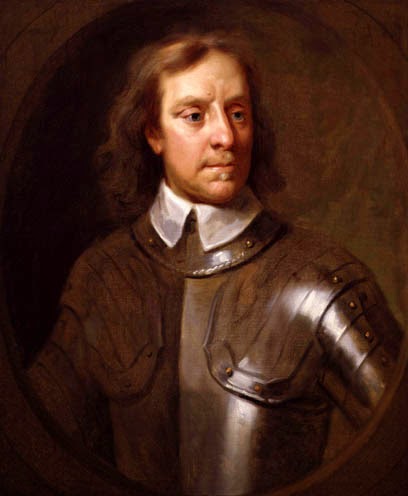
Oliver Cromwell, leader 
of the Puritan faction and 
Lord Protector of England
after the abolition of the 
monarchy

There is a lot that I want to get to.  I want to follow up on the French and Anti-Semitism theme with the connections between Anti-Semitism and Catholic “Traditionalist” movements as well as Political Monarchism and Catholic Traditionalism.  Then I have a lot of material on the dissatisfaction of the Traditional wing-nuts with Pope Francis, and the whys and wherefores of their anger for the Pope, as well as how the Pope’s political agenda—Income Inequality, Climate Change, etc—are fueling the neo-traditionalist anger towards him.  I still have two more posting’s on the Pope’s Christmas message to the Curia.  And I have yet to finish my series on the Katholic Krazies.  And in the midst of all this, Pope Francis and others keep making the news. 
But let’s go back, at least for today, to my Church of England series.  I bit off more than I could chew when I picked that topic, but we are too far into it to abandon it and while it elicits fewer hits than my occasional skewering of Cardinal Burke and other primping prelates, it has a committed and loyal leadership to keep letting me know how much they appreciate it.
So we left off with the English Civil War. Parliament abolished episcopacy (government by bishops) in 1646 and the monarchy in 1649.  (James I was right: no bishop, no king.)  With the abolition of bishops, the Church of England became Presbyterian in government, but would actually best be described as what we Americans know as “Congregationalist.”  The Book of Common Prayer and its liturgical forms were discarded in favor of The Directory For Public Worship which was borrowed from the Scots Tradition established by John Knox almost a century before.  The purpose was to purify any elements of “Romish” doctrine, practice, or superstition from Reformed worship.  The “rule of thumb” was that for anything to be done in public worship, there must be an explicit warrant for it in the New Testament.  This rule, while applied strictly, was also applied somewhat uncritically as historical primitive church practice was, in fact, little known in the 17th century and there was often a sort of sentimental projection backwards of a certain ideology/idealism onto a romanticized primitive Church.   Archbishop Laud’s restoration of altars (usually wooden tables but covered with rich hangings) in the former chancels, along with cross and candles that had re-appeared in some places, were all done away with, while plain wooden communion tables re-appeared.  Where copes or even surplices had been used, they too were suppressed and the ministers wore simply their black academic gown.  There was no pronouncing of the absolution after a confession of sinfulness, no recitation of the doxology, no use of the Nicene or Apostles Creeds, no liturgical seasons (Advent, Lent, etc.)  or feasts (including Christmas, Easter, Pentecost).  There was no Confirmation service, no provision for Holy Communion for the sick, and no giving of a ring in marriage.  The only hymns that could be sung were metric psalms, and some were opposed to even these.  In fact, some ministers or congregations refused to use even the Lord’s Prayer, rejecting any set words for prayer.  There was no burial service lest the appearance be given of prayers for the dead, but the minister could give a sermon on the occasion of a funeral admonishing the living to keep in mind their impending call to stand before the Throne of Judgment. and civic honors could be paid to the deceased according to the dead person’s station.    Baptism was never to be administered privately but only on the occasion of Sunday Worship and even marriage were ideally to be part of the Sunday Service.  Sunday Worship—indeed even daily worship where it was held—was to consist of scripture readings—an entire chapter of the Old Testament followed by an entire chapter of the New (and the books of the bible were to be read in sequence and not according to the abolished seasons and feasts)—followed by a long prayer by the pastor.  This, in turn, was followed by the sermon which lasted an hour or more and was to be an exhortation for people to repent from their sinful ways.  Finally there was to be a collection for the poor.  Holy Communion was to be administered “frequently” but this usually was interpreted to mean quarterly—every three months.  Holy Communion, when it was held, followed the sermon.  The minister would then read Saint Paul’s account of the Eucharistic Tradition that he himself had received (I Corinthians 11:23-26).  This was followed by a fairly long prayer asking, among other things, that through these gifts spiritually received the communicants might dwell in Christ and Christ might dwell in them.  The bread and wine were then distributed to those congregants who had remained after the morning sermon and had been approved by the minister for Holy Communion.  In some of the more rigidly administered churches communicants sat around the communion table set up in the front of the church; in others they received bread and wine passed to them in their pews.   The Anglican posture of kneeling for Holy Communion was done away with in favor of an insistence that communicants remain seated. 
Even in the more Protestant parts of the nation—London, Norwich, the south-east—the changes were not well taken by the majority of the people.  Indeed England was somewhat unsettled both politically and religiously under Oliver Cromwell’s being “Lord Protector.”  Conformity was enforced by military strength and where it could not be so enforced—rural areas, the north, and the west, the Prayer Book Liturgy—albeit without the Laudian accouterments—often surreptitiously survived.  The Burial Office was particularly popular as the official rites had been so stripped down that many people felt totally unconsoled by them.
Despite the radical turn to the most severe Protestantism, it was not far enough for some.  Even before the Civil War there was a faction among the English Puritans that began to hold the necessity of a faith-filled encounter with Christ that must precede baptism.  This idea that the believer must first accept Christ and commit himself to Christian discipleship before one could be baptized obviously ruled out infant baptism—a practice of the Church from very early in its history.  While there had been Anabaptist movements (Anabaptist from the Greek ἀναβαπτισμός, re-baptized or baptized over again) in Germany from the time of Thomas Müntzer (preached 1521-1525)  Anabaptist doctrine had spread widely on the continent throughout the sixteenth century, its first appearance for the English was in the English émigré community in Amsterdam where one-time Anglican Priest, John Smyth, had broken with the Church of England because he was opposed to the idea of a State Church, that is the political control of the State over a Church.  By 1609 Smyth had come to believe that one must acknowledge Christ as Lord and Savior before one could be baptized.  Smyth re-baptized himself and then his followers.  Smyth never returned to England and in fact sought to join the Mennonites, a religious community in Holland (and elsewhere in Europe) that also practiced believer’s baptism.  After Smyth’s death, however, a portion of his flock returned to England.  Other Anglicans, all of the Puritan faction, also came to hold believer’s baptism.  John Spillsbury was a shoemaker who belonged a church that followed Smyth’s teaching that the Church must be independent of the State (they were known as Separatists)  and he also held for infant baptism.  In 1638, on the eve of the English Civil War, Spillsbury set up his own church which not only practiced believer’s baptism but insisted that baptism must be by full immersion, that is the baptized person must be brought totally under the water and not simply have it poured over him or be sprinkled with it. 
Like others of the extreme Puritan wing, these Baptists (as they came to be known) rejected any of the liturgical practices of the Church of England which they saw as holdovers from the Church of England’s Catholic past.  Worship was totally without form and spontaneous.  Some even forbad the reading of the scripture during worship, claiming that since the scriptures were being read in translation they were “the work of men and not of God.”  Hymns were forbidden, though psalms—including those in metrical form—could be sung.  There were to be no organs in their meeting houses, nor candles (except, of course, for lighting), crosses or other ornaments.  The ministers wore plain street clothing or, if they had matriculated at university, their gown.  Baptism and Holy Communion were the only “ordinances” (the word “Sacrament” being too Catholic). 
With the collapse of the Episcopacy in 1646, such chaos resulted in the Church of England that the Baptist congregations were not only, for the most part, unharmed but unnoticed.   They looked like the Puritan (Congregationalist) congregations in every respect except for their mode of baptism.  Consequently they were able to grow unmolested.  They never became particularly big in England, though they did have considerable success in Wales.  Meanwhile, their ideas spread to the North American colonies, and especially Puritan Massachusetts, where they did meet with persecution from the predominant Congregationalists in the colony.  Massachusetts dissidents fled to Rhode Island where they shaped the colony in a slightly different way, arguing both for freedom of conscience and separation of Church and State.  The Baptist movement in North America would only really take off in the Second Great Awakening, a religious revival movement in the early 19th century, but American Baptists have always been stalwarts on the separation of Church and State.  Classically Baptists have also been in favor of freedom of religion but in the current culture war environment that is eroding in some quarters.  More on the Baptists at some future time.  

Thursday, January 15, 2015

History of the Anglican Church CV

Charles I at his trial

To pick up on the English Civil War and its impact on the development of Anglicanism, after only a few years following his accession to the throne in 1625, Charles was losing popular support.  Archbishop Laud’s High Church liturgical reforms went too far for many who had accustomed themselves to Calvinist austerity in worship and resented the innovations.  (There are always those who resist and resent liturgical development, even when it is to improve the theological footing of the Liturgy.)   His wars were costly and his failure to win them a national embarrassment.  His dependence upon his favorites for council and his opposition to Parliament left the people feeling unheard and unrepresented.  Charles also had a program to drain “The Fens”—the marshy swamplands in eastern England.  The program would enrich his friends who were investing in it with hopes of converting the swamps to good rich farmland, but disrupt the lives of the locals who for centuries had made their living fishing and wildfowling.  The King and Parliament were in a political tug of war with the Commons reflecting the mood of the ordinary people, especially the merchant class of the South and South East (including London) and the King representing the views of the landed aristocracy. 
By the beginning of 1642 as Parliament became more assertive in their resistance to the King’s policies, and the King felt himself losing control, Charles appeared at the House of Commons with 400 soldiers to arrest five members of the House whom he perceived to be the leaders of the opposition to his policies.  Charles was angry about the execution of Lord Wentworth, his Lord Deputy for Ireland and fearful about the fate of his Archbishop of Canterbury, Laud, whom Parliament had imprisoned.  Wentworth had only carried out the King’s requirements to raise funds in order to avoid having to convoke Parliament to impose new taxes and Charles was in sympathy with Laud’s ceremonial approach to worship.  The King’s failure to arrest the opposition left him fearful of his safety and the safety of his family and fled London.  The rumors—quite probably true—were that that the Queen, Henrietta Marie, had persuaded Charles to arrest the Parliamentarians.  It was a disaster.  The five members of the House had been pre-warned and fled before the King arrived.  The King’s coming into the House and intimidating it with his 400 guards was seen to be a gross violation of Parliamentary right and no monarch has since been permitted to enter the House of Commons. 
After staying briefly first at Hampton Court and then Windsor, Charles sent his family to safety in France and proceeded to the North of England where he hoped to find support among the more traditional nobility and gentry.  Meanwhile the country polarized with some cities and towns declaring support for the King and others for Parliament.  This put King and Parliament at war with each other—civil war.  Painting the picture with somewhat of a broad brush, the King controlled Wales, the West, the Midlands and the North. Parliament held the allegiance of London, the South, the East and the Navy.  Charles established his capital at Oxford. 
It is beyond the point of this blog to go through the Civil War battle by battle, suffice it to say that as the war raged back and forth over the next five years, the King lost more and more and Parliament was more and more victorious.  After being besieged in Oxford, Charles fled and sought refuge with the Scots army at that time in the Midlands.  The Scots, firm in their Presbyterian belief and angry with the King for his attempts to force Anglicanism on them, betrayed Charles and sold him to the Parliamentary forces in January 1647. 
As England devolved from monarchy and episcopacy into what became political tyranny and religious chaos, the Church of England not only split along the High Church/Puritan fault line, it shattered into numerous religious sects.  With the execution of Charles in 1649, England was declared to be a “Commonwealth” with a Republican form of government.  With the abolishment of bishops in 1646 the Church officially became a Presbyterian Church.  The 39 articles—the key statement of Anglican doctrine—was replaced by the Westminster Confession; the Book of Common Prayer by the Directory for Public Worship adopted from the Church of Scotland.  I say “Presbyterian” because its ecclesial polity was Presbyterian (as different from Episcopalian—that is governed by bishops.)  As opposed to Episcopal government—government by a bishop with his officials such as Archdeacons and Deans, in the Presbyterian system local churches are governed by a body of elders (presbyters).  Churches were no longer gathered in a diocese under a bishop but governed by an assembly of presbyters known as the presbytery or classis.   I want to be careful to nuance this correctly but when I say the Church of England was Presbyterian, I am not correlating it to modern Presbyterianism, but simply to say that it adopted the Presbyterian form of organization typical of most Churches in the Reformed (as opposed to Catholic, Orthodox, or Evangelical [aka Lutheran]) traditions.  In fact both today’s English Presbyterians and Congregationalists would find in the time of the Commonwealth not their origins (they date back as movements within the Church of England to the late 16th century opposition to the Prayer Book and to Bishops) but certainly their coming of age.  The Church of England during the Commonwealth (or as it is sometimes called the Interregnum)  was a Reformed Church that was home to groups that would later distinguish themselves from one another as “Presbyterian” or “Congregational.”  And indeed, in 1972 the majority of Congregational Churches in England united with the Presbyterian Church of England to form the United Reformed Church. 
This Presbyterian/Congregationalist Church of England satisfied the Puritans who had long wanted to get rid of Bishops and the Prayer Book and Christmas and other “popish” traditions. Yes, Christmas was outlawed in England from 1647 until the restoration of the monarchy under Charles II in 1660—giving rise to the popular rhyme:
Now thanks to God for Charles return
Whose absence made old Christmas mourn
For then we scarcely did it know
Whether it Christmas were or no
But as I said, the Church did not split in two, it shattered.  The Puritan faction was not sufficiently radical for tens of thousands who found expression for their faith—or their psychosis—in dozens of far more radical groups ranging from the Anabaptists to the Diggers to the Fifth Monarchists to the Sabbatarians to the Quakers to the Ranters.  We will look at some of these groups in the future postings.  Suffice it to say that what had once been one Church with a lot of factional tension now became dozens of sects ranging from the respectable to the totally out of control.  While the Church of England had up to this time (quite unofficially) encompassed a wide variety of theological opinions and forms of worship, these various groups now broke apart into a wide variety of sects that, like Humpty Dumpty, never be put back together again.  Suffice it to say for the purposes of this blog, that the traditional Church of England, a National and Episcopal Church, ceased to exist.  It would be restored in 1660 along with the monarchy, but never again would it encompass the almost universal composite of the English people.   


Friday, December 5, 2014

Foundations of the Anglican Church C


Old Ship Meeting House in Hingham
MA, an example of Puritan worship
space.
Robert Browne (c1555-1633) had studied at Cambridge where he fell under Puritan influence.  He served as a Lecturer at Saint Mary’s Church, Islington—at the time a wealthy suburb of London and today right smack in the middle of London.  A Lecturer was a lay preacher—a man with sufficient theological education to preach but not ordained.  Lecturers were very popular among the Puritan segment of the Church of England which stressed preaching, while the Episcopal faction generally preferred to limit preaching to those in Holy Orders and so tie it closer to formal worship.  It should be pointed out that the clergy of the Church of England, even before the Reformation, were all University men, educated at either Oxford or Cambridge.  Cambridge had always been the more theologically radical and what one might today call “low Church.”   Browne returned to Cambridge after several years at Saint Mary’s Islington and was encouraged to take Holy Orders, but shortly after ordination gave up hope that the Church of England could be reformed from within.  He attempted to set up a separatist congregation at Norwich—that is an independent congregation not under the bishop but ruled by its own members—and was arrested for doing so.  Powerful family connections won him his freedom but not tolerance of his ambitions for a separate Church. He and his followers moved to Middleburg in the Netherlands where they could form an independent congregation.  Browne and others like him believed that the Churches of the New Testament were such independent congregations, each having their own pastor and each being self-governing.  Browne was reacting against two things: the authority of the State over the Church and its policies (remember, the Church of England was a State Church and thus governed by Parliament) and an established hierarchy in which bishops had authority over a number of congregations, thus usurping the authority of the congregation’s local pastor.  Browne’s understanding of primitive Church governance was a bit naively romantic, but at the same time was closer to the post-Apostolic Church of the 2nd and 3rd centuries than the diocesan authority structures of either contemporary Catholicism of Anglicanism. 
In any event, Browne soon gave up on his separatist notions and returned to the Church of England which he served as headmaster of several schools and rector of Achurch in Northamptonshire.  (Achurch is the name of the parish.)  He died within the Anglican Communion though he had founded the separatist movement.  
Richard Clyfton was an Anglican priest of the Puritan faction appointed to the Church of All Saints, Babworth.  Despite his holding a benefice in the Church of England, he followed Browne and became a Separatist.  Among the members of his congregation which met at Scrooby Manor was William Bradford who was one of the leaders of the Pilgrim emigration to Massachusetts Bay. 
While the Pilgrims who settled at Plymouth were Separatists and rejected the authority of the Church of England—both its bishops and its supervision by Parliament—the majority of settlers in Massachusetts Bay Colony were Puritans who in the 1620’s and 30’s still considered themselves members of the Church of England.  However as under James, and even more under his son, Charles I, (reigned from 1625 until his execution in 1649), the Church of England moved increasingly away from the Calvinist/Puritan ideals towards a recovery of its Catholic liturgical heritage and Arminian doctrine; consequently the co-existence of the Puritan faction and the Episcopal faction in the same Church of England became more and more strained.  In the New England colonies there were no bishops and no royal officials who could insist on worship conforming to the Book of Common Prayer.  Ministers and Congregations were free to do more or less as they wished, while back in England non-conformity was dealt with with an increasing severity.  It was only a matter of time until the tension between the two factions would set off an explosion that would shatter the Church of England.  And it would do more than that, it would bring down the monarchy. 
I think this is a particularly important period for us to look at.  Increasingly since the Second Vatican Council the Catholic Church, at least in the English speaking world (and too a lesser extent in France and Germany) has also seen a division between two distinct visions of Church.  This is not totally new, at least here in the United States where the recusant tradition of the old Maryland Catholics gave a markedly different Catholicism than the immigrant tradition brought over from France during the French Revolution and later from the German, Italian, and Eastern European Catholics who settled here in the 19th century.  The different Episcopal styles of Ambrose Maréchal and John England in the early 19th century or the conflicts between Cardinal Gibbons and Archbishop Corrigan in the late 19th century witness to two distinct—and to some extent incompatible—ecclesiologies in American Catholicism.  Today we see the Church of Cardinals Burke and Archbishop Cordileone and Bishop Finn and its very different style than the Church of Cardinal O’Malley and Archbishop Cupich.   Like the Church of England in the late 16th and early 17th centuries we can live together in the same broad communion, but how far will this last without breaking?  Certainly Burke or O’Malley or Cordileone or Finn or Cupich will never break bonds with Peter in Rome and thus with one another, but there is a rising tension among priests and peoples that might easily snap the cords, each accusing those of the other side of betraying the tradition.  As a historian I think that not only is schism a possibility but that it is all but inevitable unless we are willing to allow for a pluriformity of Catholicisms in which legitimate differences of discipline and even doctrine are respected.  A rigid uniformity, on the other hand, will be very detrimental to the future of the Church.